

Opening a beekeeping supply catalog for the first time is a lot like stepping into a giant candy store—except the candy has stingers, and there are fifty different types of wooden boxes, veils, and gadgets to choose from. It is incredibly easy to get overwhelmed and feel like you need to buy one of everything just to get started.
Fortunately, you don’t need a shed full of high-tech gear to keep a hive happy and healthy. In fact, starting simple is the best way to build your confidence and learn the ropes.
To help you cut through the noise, we’ve broken down the absolute essentials every new beekeeper needs to start their first season off on the right foot.
The Hive: The Langstroth System
While there are a few different hive styles out there, the Langstroth Hive is the industry standard for a reason. Its stackable, modular design makes it easy to manage, expand, and inspect.
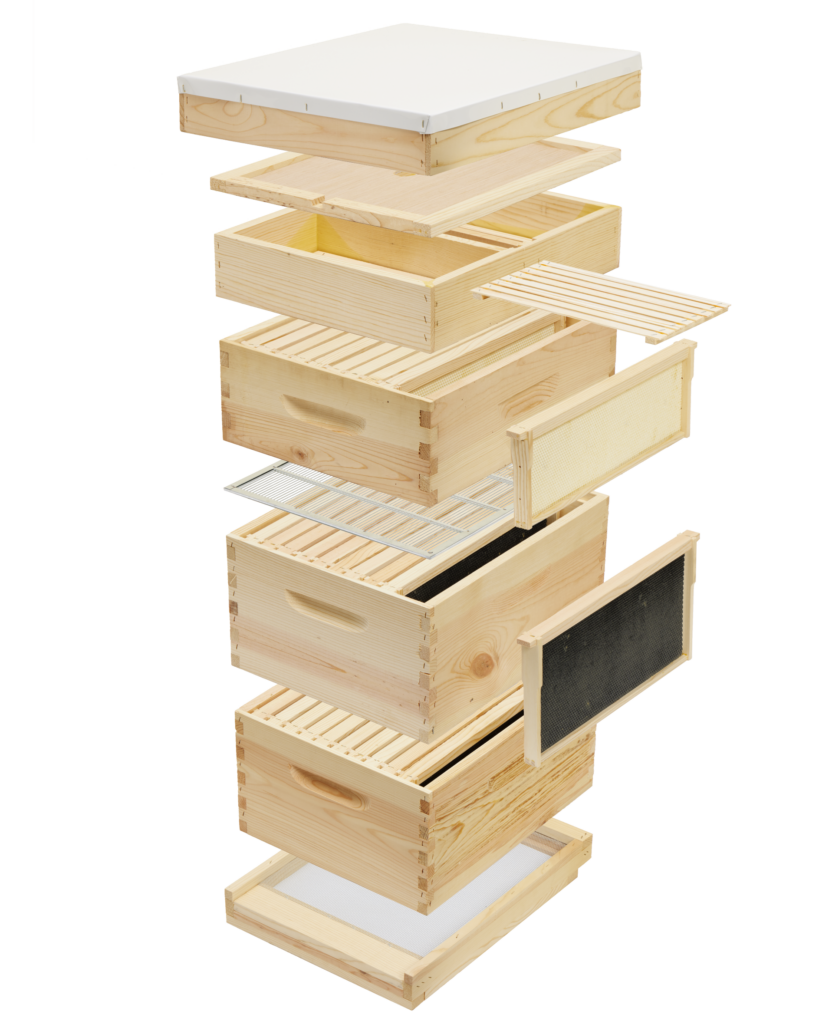
A complete starter hive setup typically consists of:
- The Hive Stand: Keeps your hive off the damp ground, away from critters, and at a comfortable working height for your back.
- The Bottom Board: The floor of the hive. We highly recommend a screened bottom board because it helps with ventilation and pest management.
- Deep Hive Bodies (Brood Boxes): These large wooden boxes are the “nursery” and “living room” of the hive, where the queen lays her eggs and the bees raise their young. You’ll usually start with one and add a second as the colony grows.
- Frames and Foundation: The rectangular frames that slide into the boxes. They hold the wax or plastic “foundation” where the bees will build their beautiful hexagonal comb.
- Inner and Outer Covers: The inner cover provides ventilation and prevents the bees from gluing the top lid shut, while the telescoping outer cover acts as a weatherproof roof to keep the elements out.
Personal Protection: Your Armor
Confidence is everything when you are opening up a hive of ten thousand bees. Having the right protective gear allows you to work slowly, calmly, and mindfully without worrying about stings.
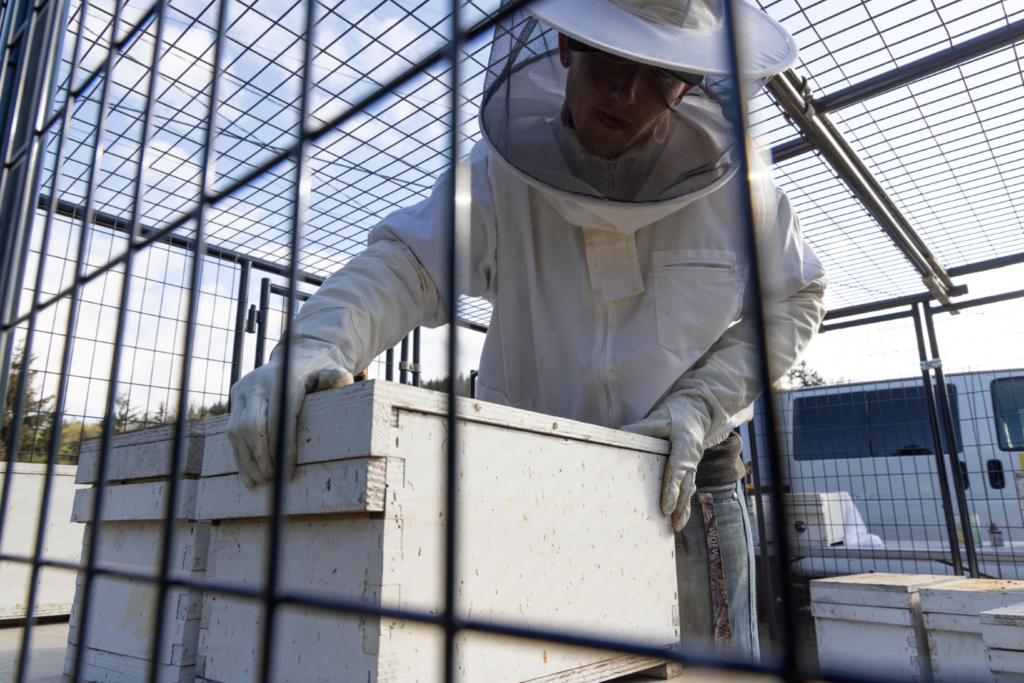
- The Veil or Hat/Veil Combo: This is the most crucial piece of safety gear. Bees are naturally drawn to dark, moving areas (like eyes and hair), so protecting your face and neck is non-negotiable.
- The Beekeeping Jacket or Full Suit: For beginners, a full suit offers maximum peace of mind. However, a high-quality, ventilated jacket is often preferred because it keeps you cool during hot summer inspections while still offering excellent torso protection.
- Gloves: Look for thick, sting-resistant goatskin gloves with long sleeves that stretch up your forearms. As you gain experience, you might transition to thinner nitrile gloves for better dexterity, but heavy-duty gloves are perfect for building initial confidence.
The “Big Three” Hand Tools
You can run a successful hive inspection with just three simple, inexpensive tools. If you have these in your toolbox, you’re ready for almost anything:
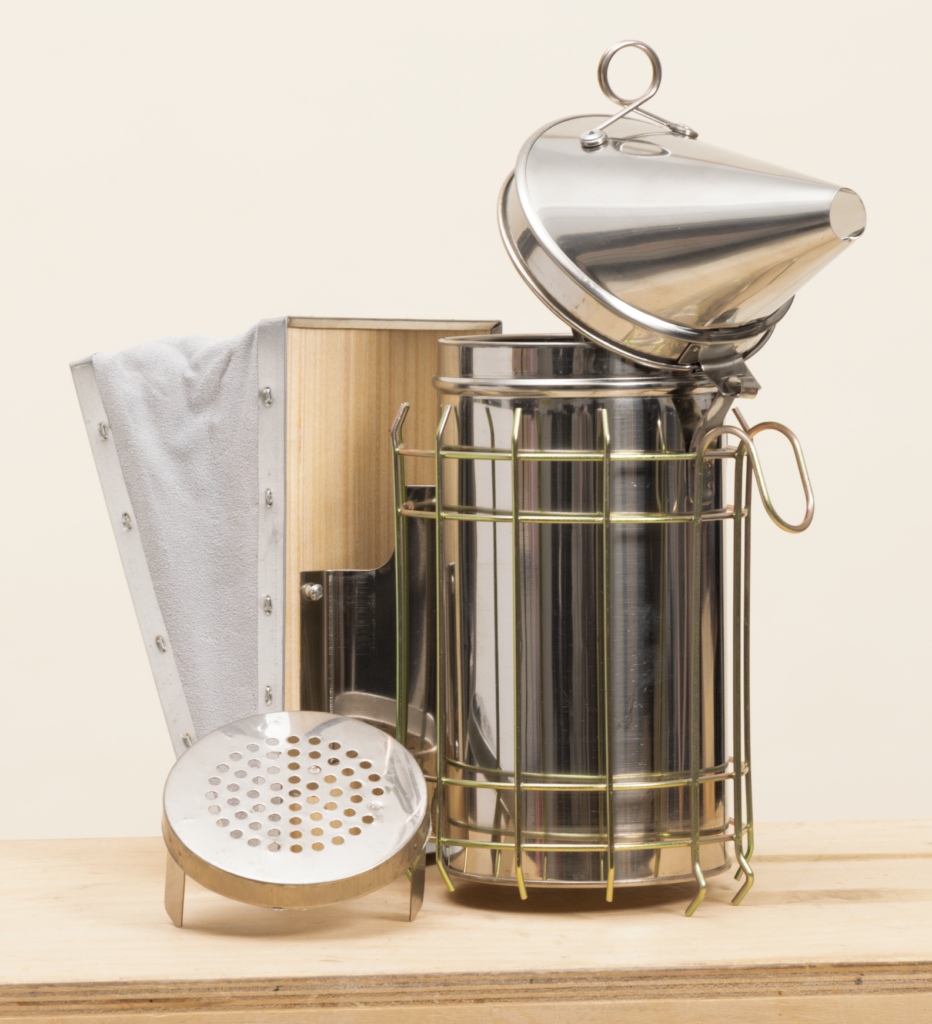
- The Smoker: This is your primary communication tool. Pushing a few gentle puffs of cool smoke into the hive masks the bees’ alarm pheromones and signals them to gorge on honey, which makes them incredibly calm and docile during inspections.
- The Hive Tool: Bees love to seal every crack and seam of their home with a sticky bee-glue called propolis. A standard flat hive tool acts as a pry bar, scraper, and frame-lifter all in one. You literally cannot open a hive without it!
- The Bee Brush: This long, soft-bristled brush is used to gently sweep bees off a frame if you need to inspect the comb closely, harvest honey, or clear a space to work.
The Starter Feeder
When you first install a new nuc or package of bees, they have a massive job ahead of them: they have to build out fresh wax comb, raise new baby bees, and establish their home. This requires an immense amount of energy.
Providing a simple sugar-water syrup using an entrance feeder or a top hive feeder during their first few weeks gives them the fuel they need to build up their strength quickly without depleting their early nectar stores.
Ready to Suit Up? If you are ready to get your hands dirty, the best next step is to come visit us at the shop. We love walking new beekeepers through the gear in person, letting you try on jackets to find the perfect fit, and helping you pick out the exact setup that makes sense for your yard.


Be the first to comment